
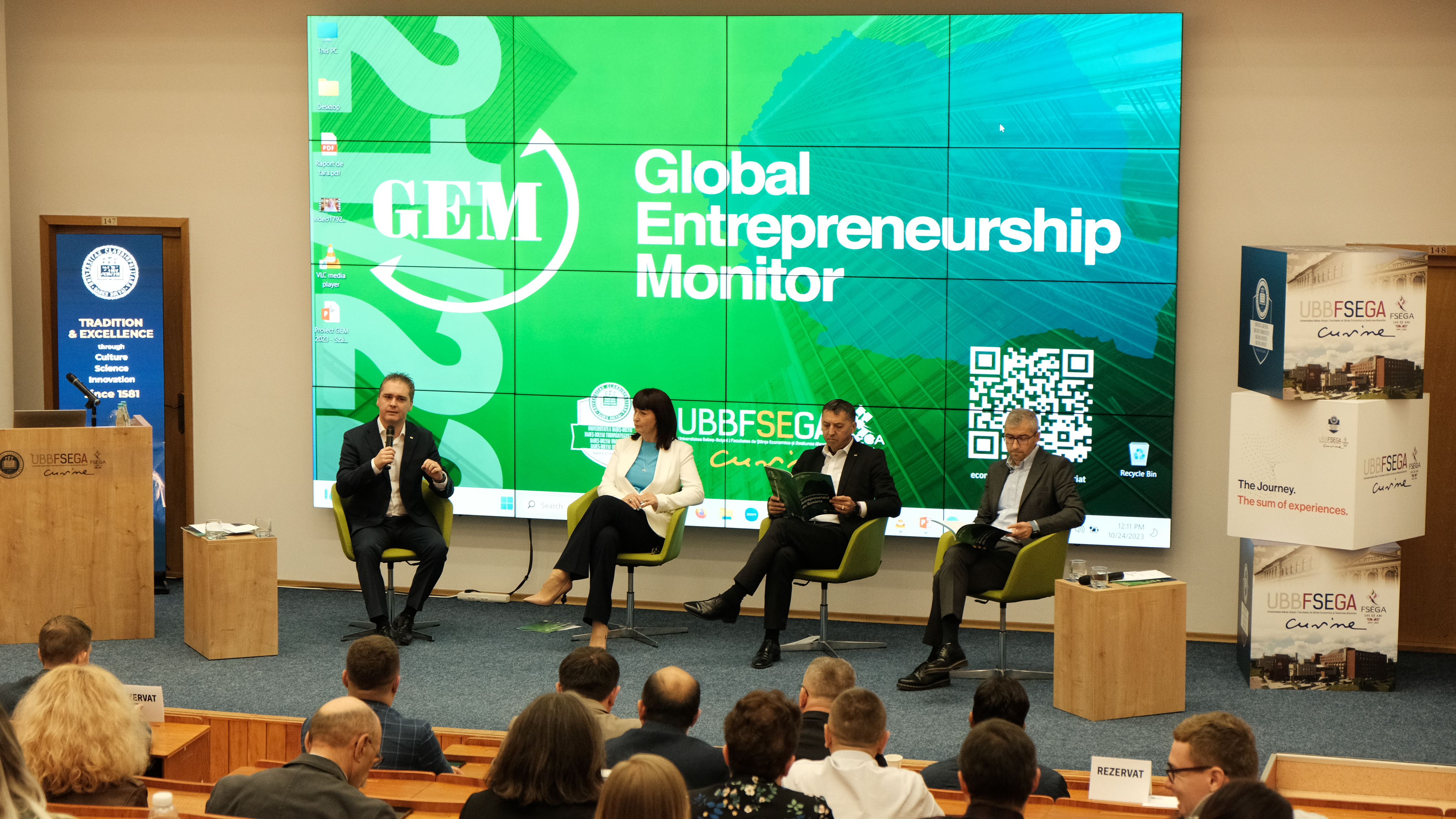
By Szabó Tünde Petra, Dézsi-Benyovszki Annamária, Benedek Botond, and Györfy Lehel-Zoltán
Romania’s entrepreneurial landscape is marked by low engagement, high fear of failure, and limited innovation, placing the country at the bottom of the Global Entrepreneurship Monitor (GEM) rankings. The latest GEM Romania National Report offers a sobering view of the challenges facing entrepreneurs and the broader ecosystem as well as actions to improve in these areas.
Issues within the Ecosystem
Romania recorded the lowest rate of early-stage entrepreneurial activity (TEA) among the 45 economies surveyed by GEM, with just 5.85% of adults involved in starting or running a new business. This is well below the G7 average of 14.5%. Intentions to start a business also remain subdued, with only 8.95% of Romanians expressing plans to launch a venture. By comparison, this figure came in at 28.3% among young adults in France.
One of the most striking findings is the high level of fear of failure, cited by 58.97% of Romanians. Although entrepreneurship is viewed positively by many, the perceived risks and lack of support deter action.
Also troubling is that Romania saw a rise in necessity-driven entrepreneurship. A staggering 87.5% of early-stage entrepreneurs started their business due to lack of employment options, rather than to pursue a market opportunity or create wealth.
Romania’s National Entrepreneurial Context Index (NECI) score was 4.3/10, placing it 28th out of 49 economies. Only three framework conditions – physical infrastructure, commercial infrastructure, and market dynamics – were rated as sufficient. Entrepreneurship education in schools scored just 2.74, highlighting a critical gap in preparing future entrepreneurs.
Gaps in Inclusion and Innovation
Gender disparities remain pronounced: men are more likely than women to engage in entrepreneurship, while both groups continue to face limited access to resources and institutional support. Romania scored 4.47 for equal access to resources for women, but only 3.43 for social support, below international averages.
Digital adoption is also notably behind global trends. Only 2.4% of early-stage entrepreneurs offer fully innovative products, and 98.8% rely on basic technologies. Artificial intelligence and advanced systems remain under-utilised, particularly among established businesses, highlighting a persistent digital gap within the entrepreneurial ecosystem.
A Call for Strategic Reform
As Romania grapples with economic uncertainty and demographic shifts, entrepreneurship could be a vital lever for resilience and renewal. Yet, the GEM report warns that without a coherent strategy, Romania risks falling further behind more dynamic economies.
The report calls for targeted interventions to reduce psychological barriers and build confidence among aspiring entrepreneurs. Policymakers are urged to invest in entrepreneurship education, reduce fear of failure, and support innovation and inclusion. Closing gender gaps, improving digital capabilities, and fostering a more enabling environment are essential steps forward.
Access the report. The GEM Romania National Team is hosted by Babeș-Bolyai University in Cluj-Napoca, one of the country’s leading academic institutions. Their work contributes to the global GEM network and provides valuable insights for entrepreneurs, researchers, and decision-makers. The 2023/2024 report is supported by Babson College and London Business School, with national coordination by the Faculty of Economics and Business Administration at Babeș-Bolyai University.