
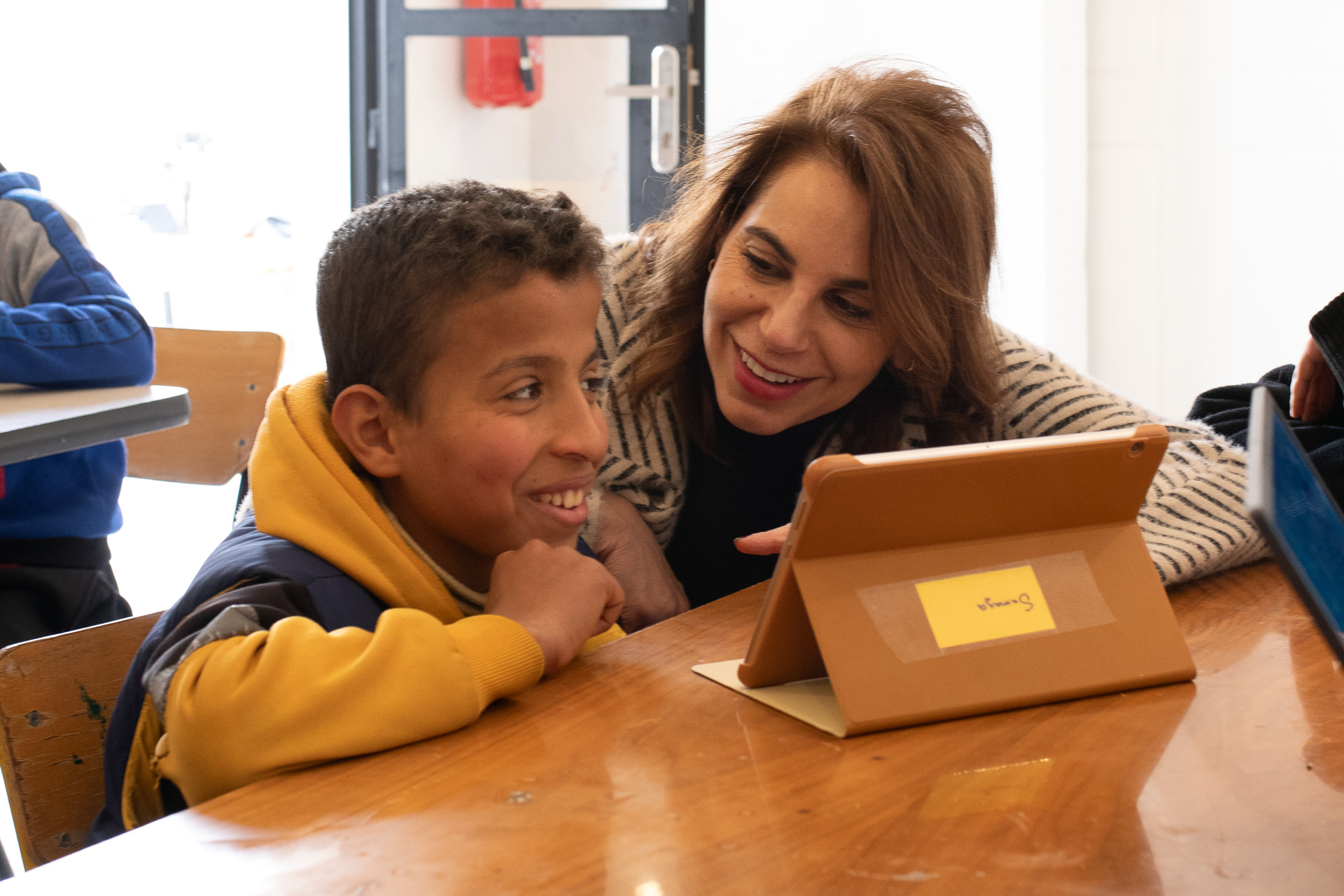
When Rama Kayyali couldn’t find quality Arabic educational content for her children, she didn’t just accept the gap. Instead, she built a bridge across it.
What began as a passion project between friends has grown into Little Thinking Minds, a regional edtech platform that today reaches more than half a million learners across the Middle East and beyond.
Kayyali, a native of Jordan and the company’s CEO and co-founder, recalls those early days with clarity and conviction. “I wanted my children to love their language, but the tools simply weren’t there. That opened my eyes to a much deeper issue: Millions of children in our region were being left behind because the resources weren’t relevant or accessible.”
Fueled by this realisation, and the staggering statistic that 60% of students in the region face learning poverty, Kayyali set out to change the narrative around Arabic literacy.
Little Thinking Minds now operates in over four countries, delivering culturally resonant, digitally-driven learning tools. Their platforms are used in public, private, and refugee schools alike across the region, and independent studies show up to a 30% improvement in literacy outcomes among users.
Kayyali’s journey has not been without obstacles. As a woman entrepreneur in the Arab region, Kayyali has often found herself navigating rooms where she’s the only woman present, particularly in dealings with public sector stakeholders or investors.
“You have to work twice as hard to earn trust,” she said. “And motherhood doesn’t pause just because you’re running a business.”
What has made the difference, she notes, is community. Access to networks like the Entrepreneurs’ Organization and Endeavor Jordan, and support from initiatives like the Cartier Women’s Initiative helped her realise that purpose and leadership are not mutually exclusive.
For example, being part of the Entrepreneurs’ Organization has enabled Kayyali to grow as a leader through peer-to-peer learning, while also amplifying the voices of other Arab women founders through local and regional chapters.
Cartier Women’s Initiative has provided global visibility, mentorship, and catalytic funding, giving her the platform to scale impact while staying grounded in her values.
“Mentorship and peer networks really do move the needle,” she said.
In April 2025, Little Thinking Minds was acquired by Seesaw Learning, one of the world’s fastest-growing edtech companies. The strategic exit marks a new chapter, one focused on scaling impact even further. Together, they aim to become the leading K–12 edtech platform for learning outcomes, teacher empowerment, and parent engagement in the region.
Sustainability is central to their vision, not only in environmental terms, but in building tools and messaging that create lasting value.
“We develop content that teaches children about climate change, gender equity, empathy, and citizenship,” she said. “We collaborate with local creatives and publishers, supporting regional ecosystems along the way.”
Looking ahead, Kayyali sees artificial intelligence as a powerful force for equity and personalisation. From adaptive learning journeys to teacher-facing insights, auto-generated content, and corrective feedback, AI is helping Little Thinking Minds tailor its offerings to the diverse needs of learners, while maintaining a deep commitment to cultural relevance and educational quality.
“But it’s not a silver bullet,” she cautions. “We need to approach AI with both ambition and care. It's a tool, not a replacement for real pedagogical wisdom. Entrepreneurs like me aren’t just building businesses. We’re trying to solve systemic problems. With the right support, from policymakers, funders, and communities, we can build solutions that last.”
This profile will be featured in our forthcoming GEM Women’s Entrepreneurship Report to be launched later this year. These stories help bring our data to life. This article was made possible thanks to the Ministry of Digital Economy and Entrepreneurship (MoDEE). The Ministry plays a vital role in supporting Jordanian startups and entrepreneurs within the ecosystem.