
By Professor Sreevas Sahasranamam
My journey with the Global Entrepreneurship Monitor (GEM) began during my PhD research at the Indian Institute of Management Kozhikode (IIM-K), where I utilised GEM data to explore the role of formal and informal institutions on social entrepreneurship entry across countries. Though initially unconnected to the GEM India or global teams, the global data that was publicly available became fundamental to my research.
Upon moving to the UK to join Strathclyde Business School as an assistant professor, I was invited by Professor Jonathan Levie, then co-lead of GEM UK, to engage with the GEM UK team. This marked a turning point, allowing me to engage more deeply with GEM data across various research projects for the Scottish Government and collaborate directly with the GEM global team. It was during that period that I began to shift my focus towards extracting policy-relevant insights from GEM data.
 This commitment to policy-oriented impact intensified when I was invited to join the co-authoring team of the GEM Global Report in 2022. I saw this as an opportunity not merely to contribute to the report itself, but to use it as a strategic platform by translating its findings for broader policy and general audiences.
To achieve this, I actively engaged with media outlets, developing outreach pieces around the report's launch. My efforts specifically concentrated on the Indian and UK contexts, reflecting the primary geographical focus of my research. For policy-oriented audiences, I regularly contributed blogs to platforms such as the World Economic Forum and The Conversation.
For a more general public, I leveraged personal channels and university support to disseminate insights through leading newspapers and television media, including the BBC, The Times, Economic Times, and Business Line. I have also been discussing the Global South-related entrepreneurship trends from GEM in webinars and podcasts such as the Social Enterprise World Forum (SEWF) Policy Forum and the Transforming Tomorrow podcast.
From media visibility to policy influence
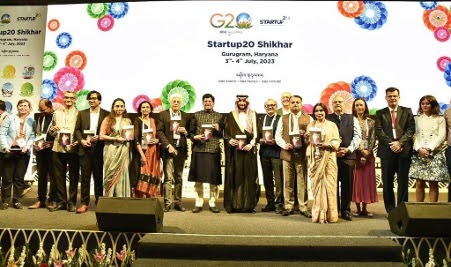
The proactive engagement and dissemination of GEM insights, particularly through blogs and media outreach, directly led to significant policy impact opportunities. In 2023, my work with GEM positioned me to serve as co-chair of the Sustainability Taskforce for G20 Startup20, a new initiative that was being developed under the Indian presidency of the G20.
 This role culminated in the G20 Startup20 policy paper on sustainability, which notably cited the GEM Global Report 2022/23, underscoring the direct influence of GEM data and its dissemination on international policy discourse. Adding to the impact that year, it was a pleasant surprise to see the Prime Minister of India, Shri Narendra Modi, tweet about insights from GEM research (see image to the right).
My association with G20 Startup20 continued into 2024, where I acted as an advisor during Brazil's presidency of the initiative, contributing insights, particularly on the intersections between entrepreneurship and poverty, towards the policy communique for 2024. In 2025, under the South African presidency, I am contributing to the Digital Economy Working Group. This engagement is particularly focused on developing a roadmap for digital micro-entrepreneurship.
Beyond these international platforms, insights derived from GEM also provided a basis for direct engagement with policymakers in India. In a fireside chat with Shri Shashank Mani, Member of Parliament, GEM India data was used to frame the discussion on driving entrepreneurship in rural towns, with particular attention to the persistently high fear of failure rate as a key barrier. In a follow-up debrief, Mani acknowledged the usefulness of the GEM insights and indicated he would reference them in parliamentary work.
Separately, Shri Annamalai Kuppusamy, senior BJP leader and former civil servant, requested a briefing document on India’s entrepreneurship ecosystem. For this, the GEM India NES summary from the Global Report was shared. The discussion highlighted GEM findings on emerging gender parity in TEA rates - a notable shift from earlier years - and ultimately led to a co-authored World Economic Forum article on the Indian entrepreneurial ecosystem, underscoring the tangible policy relevance of GEM data.
Lessons for maximising policy impact
Below are insights for GEM teams seeking to increase their policy influence.
-
Go beyond the report.
The national annual report is an essential foundation, but its value multiplies when insights are communicated in formats that resonate with diverse audiences. Translating key findings into accessible content such as blogs, podcasts, LinkedIn carousels, and targeted media outreach helps ensure that GEM research connects with both policymakers and the broader public. -
Engage strategically on social media.
Policy conversations increasingly unfold on platforms like X (formerly Twitter) and LinkedIn, where policymakers and think tanks regularly invite expert input. By monitoring and engaging with these channels, teams can insert timely, data-driven contributions that position them as trusted voices in relevant policy discussions. -
Prioritise continuous engagement
While report launching dates offer high visibility, sustained impact comes from consistent interaction. Sharing shorter insights, trend snapshots, and contextualised data throughout the year helps keep GEM’s work front-of-mind for key stakeholders and builds long-term influence well beyond a single event.
Sreevas Sahasranamam is a professor at the University of Glasgow, Adam Smith Business School and a member of the GEM UK Team. In 2025, he was recognised at the 40 Under 40 UK Awards, winning the Education category and the overall People’s Choice Award across all categories. His work with GEM has been an integral part of this journey, shaping his research, engagement, and impact in education and entrepreneurship.
This article is part of the forthcoming GEM Policy Impact Report, a special edition that will highlight how GEM National Teams have helped shape entrepreneurship policy at different stages over the past 25+ years. Access the PDF designed version of this story.