
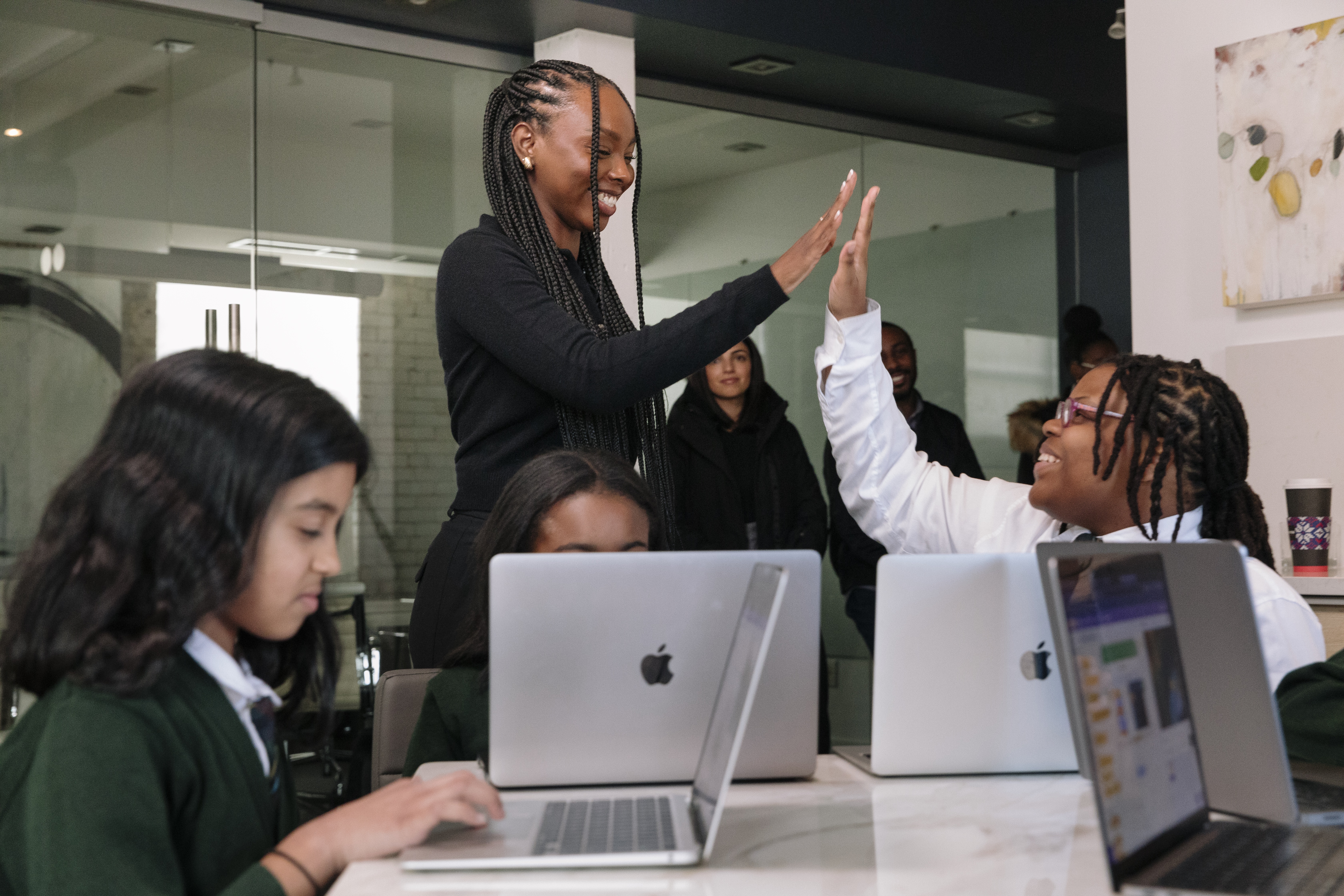
Kyla Bolden, Founder and Chief Executive Officer of Wiz Learning | Cartier Women's Initiative 2024 Fellow
At just 10 years old, Kyla Bolden had already begun teaching herself how to code. But in school, she had no pathway to nurture that passion.
“It was easy for my parents to find great coaches for my track hobby,” she recalls. “But when it came to technology, there was nothing for me.”
That early experience stuck with her. Years later, as a university student, she joined an organisation that helped connect women and minorities to corporate jobs. During this time, she noticed that candidates with coding experience were getting hired faster.
In response, Kyla launched Wiz Learning in 2016, an edtech company offering live, interactive courses in science, technology, engineering, and mathematics, coding, AI, game design, animation, and entrepreneurship. With most programmes delivered remotely, Wiz Learning’s mission is to make tech education accessible to all students, regardless of location, income, or learning differences.
“We craft a personalised education so they’re able to have autonomy over what they’re learning,” Kyla says. She notes that many students have learning differences, including being on the autism spectrum. “Our biggest goal is to make sure that all students have the proper technical, future-focused learning skills to have successful careers in the future.”
Wiz Learning partners with schools and youth organisations to fill critical gaps in technical instruction. Classes are delivered digitally but always with a live instructor present. The platform also includes “learning boosts” – on-demand activities that help students revisit concepts and apply them through creative projects.
More than 9,000 students from 30 countries have completed the company’s courses – and nearly half are girls. Many of the students come from underrepresented communities, and about 80% of participants don’t pay for the courses directly. Instead, Wiz Learning works with organisations and school districts to provide funded access to high-quality tech learning.
Although Wiz Learning’s initial focus was on supporting children, in 2023 the company expanded to serve lifelong learners as well, driven by the rise of AI and the urgent need for upskilling. Today, in addition to working with schools, Wiz Learning offers hands-on courses in coding, AI, cybersecurity, and career readiness, paired with powerful AI tools that ensure learning is easier, personalised, and future-focused.
The platform’s flexibility is a key part of making tech inclusive. Beyond teaching technical skills, Wiz Learning is reshaping who can join the sector.
“I want to make sure that the tech industry is more diverse,” Kyla says. “Everyone deserves to be here – and technology drives our world.”
Kyla also knows that real change requires policy-level action.
“A lot of funding systems still have built-in bias, whether people realise it or not, and that makes it harder for women entrepreneurs (especially women of colour) to get the resources we need,” she says. “Policymakers should be more intentional about changing that. That means designing grant programmes, investment funds, and procurement opportunities that actively support women-led businesses, and tracking where the money is actually going.”
This story will be featured in the GEM 2024/2025 Women's Entrepreneurship Report, to launch on 19 November 2025. Thank you to the Cartier Women’s Initiative, one of our report sponsors, for providing this material and helping to ground our data in a real-world context.